
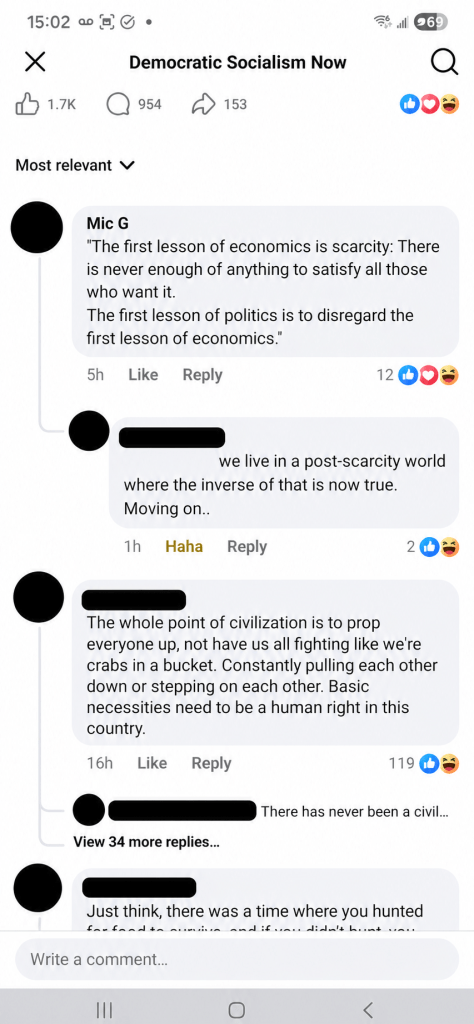
I heard recently that we’ve moved to a post-scarcity society—and that it wasn’t even up for debate.
Stopping at the gas station in the morning shatters that illusion.
If we were actually post-scarcity, there’d be no shortages. Prices wouldn’t exist. Geography wouldn’t matter. Conflicts on the other side of the world wouldn’t touch anything here because you could just replicate what you need.
That’s not the world we live in.
What we have is the most productive and interconnected economic and social system the world has ever seen. And it runs so smooth most of the time that people forget it’s not guaranteed to.
Energy is the easiest place to see it. The Iran conflict lining up with the summer gas switch pushed prices up fast. Things have “settled,” but prices are easing slowly—and they’re still not back to pre-conflict levels.
That’s not post-scarcity. That’s supply and demand under pressure.
Prices don’t just reflect supply—they reflect fear of losing supply.
Instability hits, fear spikes fast, and prices match it.
Things calm down, and prices settle the same way—uneasy and slow.
That only happens when scarcity is still very real.
And energy isn’t the only bottleneck. The whole world runs on chips that bottleneck through Taiwan. Diesel is a linchpin of society—when shipping costs go up, everything is at least liable, and more often than not likely, to increase in price.
That’s not post-scarcity. That’s efficiency with dependencies.
Now, to be fair, I don’t think most people saying this mean literal post-scarcity. I think what they mean is we’re wealthy enough to make sure people don’t starve or sleep in the streets.
And yeah—we have a safety net system. There’s room to trim fraud and deliver better for the people who actually need it.
But that’s a far cry from being able to give everybody what they want all the time.
Even the closest thing we have to abundance—information—still depends on infrastructure. For some people, that just means access during library hours.
Post-scarcity is a luxury belief because only in a wealthy society could you even pretend it’s real.
Abundance feels real until there’s no toilet paper on the shelves.
Scarcity shows up the moment you have to pull out your own wallet.
I usually try not to be definitive on things outside my lane.
But this part isn’t controversial.
Scarcity isn’t going anywhere—not without science fiction-level tech.
So before we argue about who gets what, we should understand what’s actually limited—and why.
Otherwise, we’re debating solutions to a problem we’re pretending doesn’t exist.
Because once you accept scarcity, the real question isn’t whether it exists.
It’s how you deal with it.
Markets and governments have both tried to answer that—with very different results. If there’s a better way to allocate resources, how?
Until then, we’re still operating inside constraints—whether we acknowledge them or not.
As Thomas Sowell said, scarcity is the first lesson of economics.
Everything else comes after.
Mic G


Leave a Reply